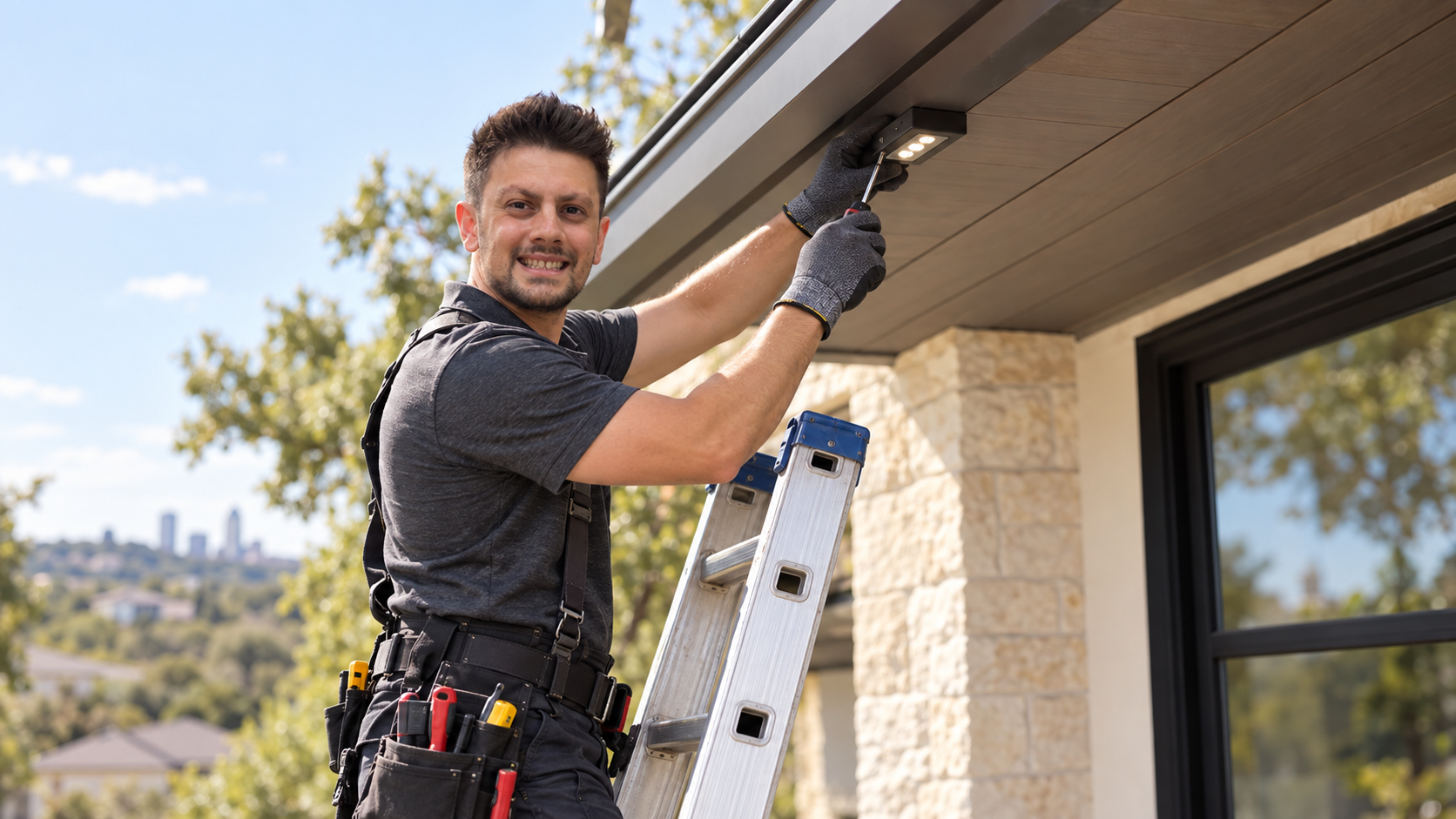
Consistent light pattern
Uniform fixture placement helps create an even sequence of projected light along the wall.
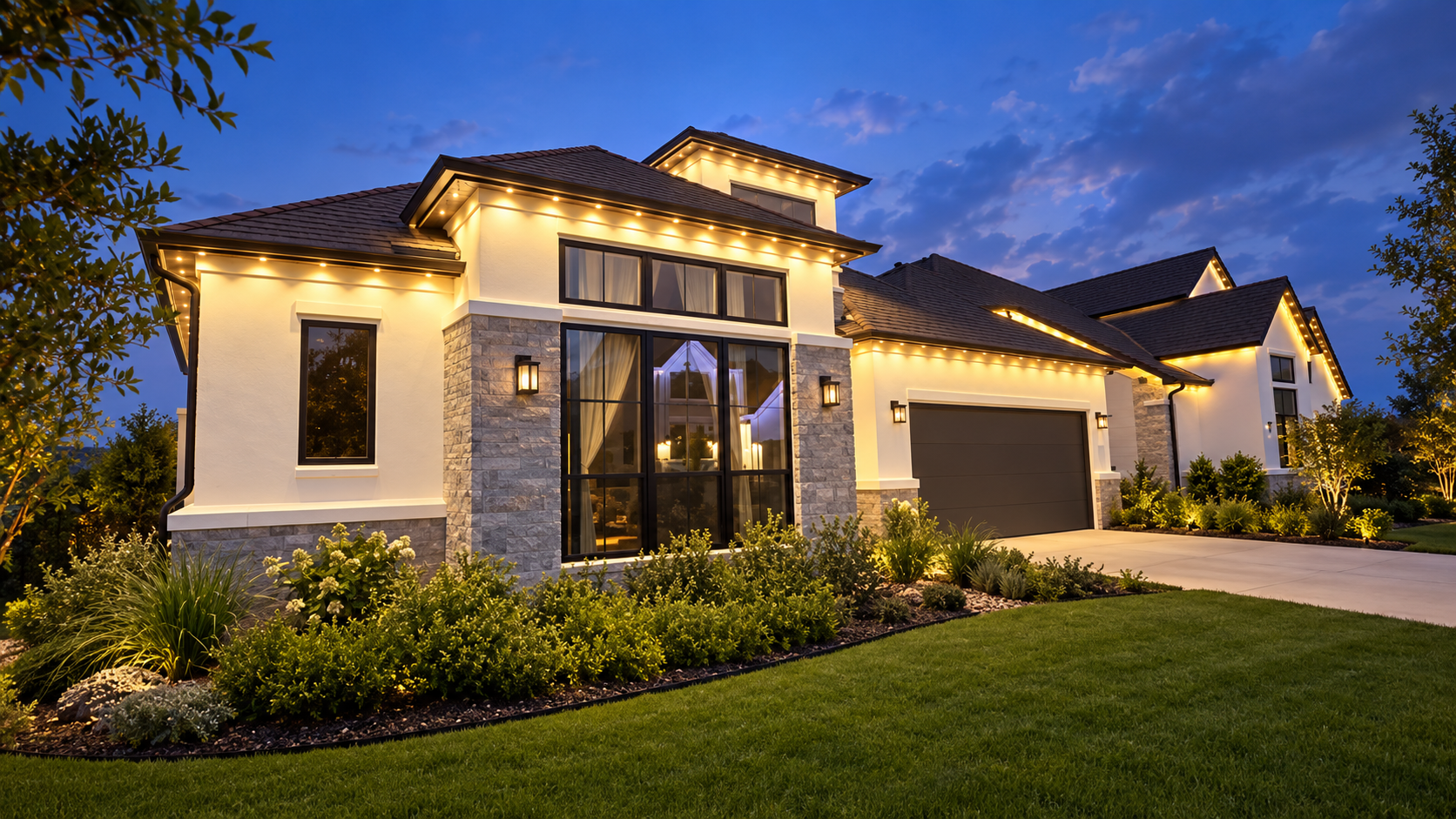
Measured, mounted, connected and configured
A successful Govee installation starts before the first fixture is attached. MST reviews the roofline, maps the lighting direction, identifies gaps and transitions, confirms power access and plans how the controller and wiring will be positioned.
The objective is a reliable system and a consistent nighttime pattern—not simply attaching lights beneath the eaves.
Confirm the illuminated sections, total path, roof height, surface condition, power access and safe installation approach.
Plan fixture placement and wall distance so the projected light pattern remains consistent.
Secure fixtures and organize wiring around peaks, corners, gaps and elevation changes.
Connect compatible components, power the system and inspect every section.
Connect the system to the Govee Home app and verify basic controls, scenes and schedules.
Uniform fixture placement helps create an even sequence of projected light along the wall.
Dormers, gables, valleys and unlit gaps are considered before mounting begins.
Controllers, power supplies and extensions are placed with access and appearance in mind.
Compatible track can create a more integrated daytime appearance and protect routed wiring.